Pope Francis, Ecumenical Patriarch Bartholomew and the Archbishop of Canterbury join together for the first time in urgent appeal for the future of the planet
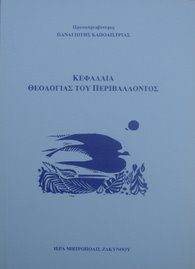
συν κεφαλαια θεολογιας του περιβαλλοντος
Pope Francis, Ecumenical Patriarch Bartholomew and the Archbishop of Canterbury join together for the first time in urgent appeal for the future of the planet
Σισμανόγλειο Μέγαρο του Γενικού Προξενείου της Ελλάδος στην Πόλη, 4 Σεπτεμβρίου 2021.
Εναρκτήρια ομιλία του Παναγιωτάτου Οικουμενικού Πατριάρχου Βαρθολομαίου στο Forum «Ecumenical Initiative for the protection of environment and culture”, που διοργανώνουν το Ευρωπαϊκό Κέντρο Βυζαντινών και Μετα-βυζαντινών Μνημείων και το Οικουμενικό Πατριαρχείο.
ΔΕΙΤΕ ΑΚΟΛΟΥΘΩΣ:
By Nikolaos Asproulis
It is widely recognized that the Paris Agreement, the encyclical of Pope Francis, Laudato Si’ (2015) the United Nations Sustainable Development Goals, as well as the numerous international initiatives undertaken by His All-Holiness the Ecumenical Patriarch Bartholomew (organization of international conferences for the protection of the Amazon, the Black Sea, etc., the establishment of September 1st as a day of prayer for the protection of the environment, the Halki Summit series of workshops, and many other events and publications), widely known as the “Green Patriarch,” constitute a hopeful sign towards the impactful public awareness for the protection of the climate. The major Christian Churches and denominations as well as respected theologians have seriously begun to worry about the climate crisis and its impact on people’s daily lives. Global warming, heavy precipitation events, floods, increasing risk of forest fires, biodiversity loss, and sea pollution from plastics, or even quite dangerous pandemics such as Covid-19, are only some of the challenges that put in jeopardy the life of humanity and the very sustainability of the whole planet. Following this line, the European Green Deal-towards a climate neutral EU by 2050, recently issued by the European Commission, did not come out of the blue. On the contrary, it follows the long endeavor of European institutions to take the lead towards a deep transformation of our life by addressing the critical and timely thread of climate change. In doing so, the European Green Deal suggests certain transformative policies (modernization of the European economy, supplying clean and affordable energy, mobilizing industry for a clean economy, building in an energy and resource efficient way etc.) for a sustainable future, taking into account, at least in principle, to not leave someone behind (just transition).
— Archbishop Job of Telmessos
The Orthodox Church has been a pioneer in addressing the environmental crisis since 1986. If she did so, it was definitely not out of political correctness or for demagogic reasons, but on the basis of deep theological convictions: as we read in the first book of the Bible, in Genesis, the world has been created good by God (Gen 1), and man has been established as its guardian (Gen 2:15).
The Metropolitan of Pergamon, John Zizioulas, recounts that the involvement of the Ecumenical Patriarchate of Constantinople in the protection of the creation started by reading an article by Lynn White, entitled “The Historical Roots of our Ecologic Crisis” published in 1967 in the journal Science. This article already asserted that the roots of the ecological crisis were theological. According to White, Christian theology was largely responsible for the ecological crisis because of the divine command of the book of Genesis: “Be fruitful, multiply, fill the earth, and subjugate it; and rule over the fish of the sea, over the birds of the air, and over every animal that moves on the earth” (Gen 1:28). Although this article primarily criticized Western Christianity, the Orthodox Church could not remain indifferent to the ecological crisis but had to be self-critical in asking whether Orthodox theology was responsible or not for the ecological crisis, and if it was the case, how to help in finding a solution.
In response to the Lynn White article, Orthodox theology underlines that man is not the processor of the earth, but its steward (oikonomos) and its guardian. Orthodox theology rejects the abuse of natural resources as a misinterpretation of God’s command to rule the world (Gen 1:28) in which White saw the cause of the contemporary environmental crisis.
4/6/2021
Σχεδόν πεντήκοντα ἔτη παρῆλθον ἀφ’ ὅτου ὁ ΟΗΕ πάνυ καλῶς καθιέρωσεν τήν 5ην Ἰουνίου ἑκάστου ἔτους ὡς παγκοσμίαν ἡμέραν ἀφιερωμένην εἰς τήν προστασίαν τοῦ περιβάλλοντος.
Διό, ἡ Διαρκής Ἱερά Σύνοδος, ὡς εἰκός, ἐπευλογεῖ καί χαιρετίζει τήν ἐν λόγῳ ἐπέτειον, δεδομένου ὅτι ἡ τοῦ Χριστοῦ Ἐκκλησία μεριμνᾷ καθ’ ὅλας τάς ἡμέρας τοῦ ἔτους, μή περιοριζομένη ὑπό τῆς τοῦ χρόνου συμβατικότητος, ὑπενθυμίζουσα πρός πᾶσαν κατεύθυνσιν καί πρός πάντα ἄνθρωπον τόν ἀπαιτούμενον σεβασμόν, τήν σωστήν χρῆσιν καί τήν ὀφειλομένην ἀγάπην πρός τό φυσικόν περιβάλλον. Τό περιβάλλον τό ὁποῖον, ὡς καί ἐκ τοῦ ὀνόματός του δηλοῦται, περιβάλλει τε καί περιλαμβάνει πάντας ἡμᾶς, τήν λογικήν καί ἄλογον κτίσιν, τήν ὀργανικήν καί ἀνόργανον ὕλην καί, ἐν μιᾷ λέξει, αὐτήν ταύτην τήν βιολογικήν ζωήν καί ὕπαρξιν ἡμῶν.